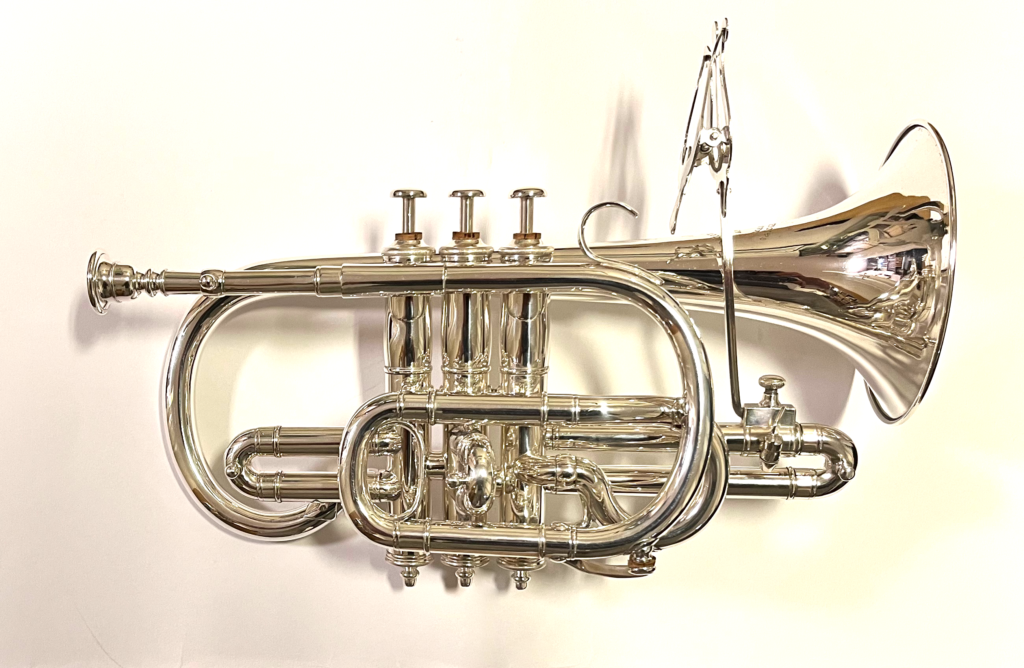
Cornopean (an early English name for cornet) in B♭ with three Stölzel valves. Manufactured by Henry Distin 9, & 10, Great Newport Street, Leicester Square, London in 1855c with crooks to A, A♭, G. No serial number.
Alto Flugelhorn in F with crooks to E & E♭
Manufactured by Henry Distin. 31, Cranbourne Street. Leicester Square, London in 1855c. Serial number: 1998
Trumpet in B♭ with three Perinet valves. Manufactured by Henry Distin’s Musical Instrument Manufacturing Company. 9, & 10 Gt. Newport Street, Leicester Square, London from 1862-1866. Serial number: 5431. The shepherd’s crook is an unusual aspect of the design. The instrument was evidently sold to the Wilhelm Hampe Music Company in Amsterdam who attached their badge onto the bell.
Ventil Horn. Manufactured by Henry Distin in 1860c and pitched in C (with crooks). Serial # 421.
Post Horn in A♭ Manufactured by Henry Distin in 1860c.
Cornet in B♭ with crooks to A & A♭ Manufactured by Distin & Co. 9 & 10 Gt. NEWPORT St., LONDON 1864. Serial number: 10128
Cornet in B♭ with A shank. Manufactured by Distin & Co. 9 & 10 Gt. Newport St., London 1870c. Serial number: 10997
Cornet in B♭ with A shank. Manufactured by Distin & Co. 9 & 10 Gt. Newport St., London 1865c. Serial number: 10271 (10350 is stamped on the valve casing)
Bugle in B♭ Manufactured by Henry Distin 9 & 10 Great Newport St. London. Date: 1868c. Serial number: 20295
Pocket Cornet in B♭ Manufactured by Distin & Co., 9 & 10 Great Newport St. London. Date: 1873c. Serial number: 12034 (Stamped on the valve casing: 14804)
Cornet straight mute. Manufactured by Henry Distin around 1870 in USA.
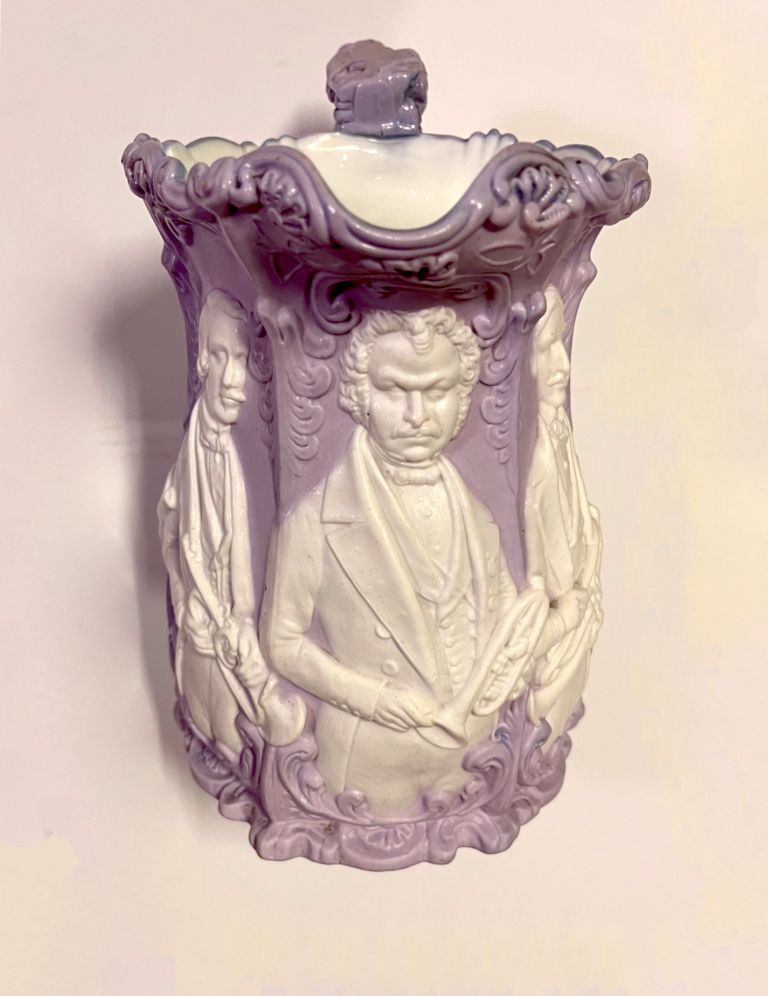
Ceramic Jug. Made by Samuel Alcock around 1845, and dedicated to the Distin Family
Piccolo Cornet in C. Manufactured by Henry Distin in 1857.
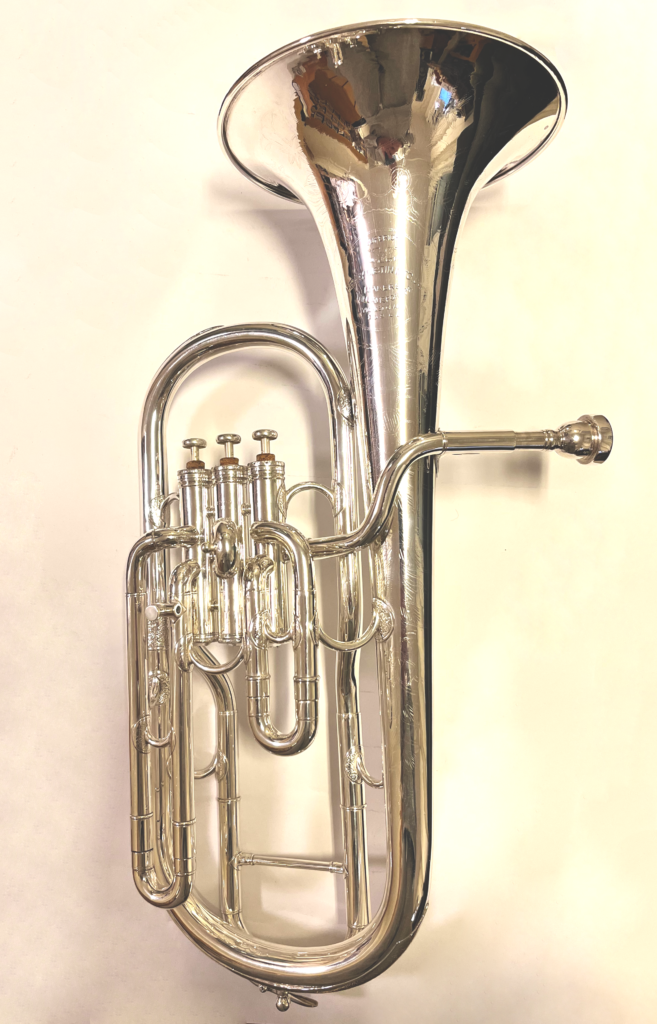
E♭ Alto Horn
Made around 1897 by Henry Distin Manufacturing Co. in Williamsport, Pennsylvania.
Serial Number: 15263
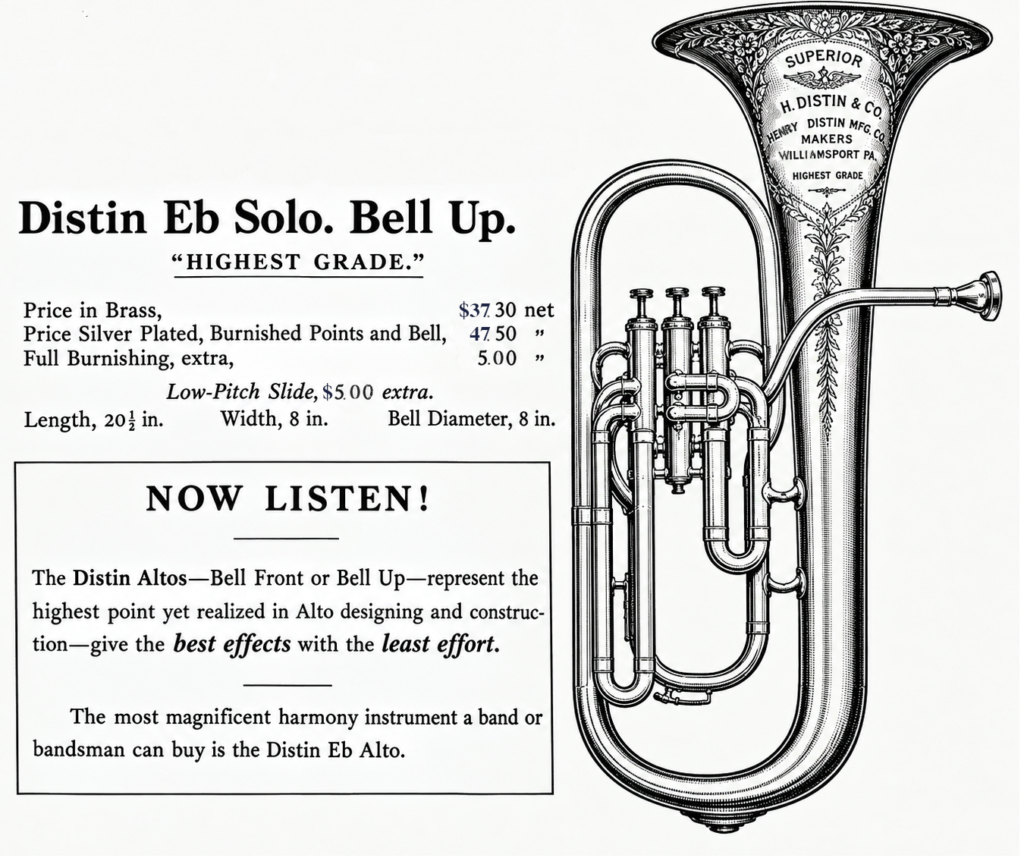
The horn was made in high pitched E♭ (A=452 Hz) and an extra “Low-Pitch Slide $5.00” (see advert) is offered. This brought the pitch of the instrument down to (A=435 Hz).